
Pinto Vs Paint Horse: What’s the Difference?
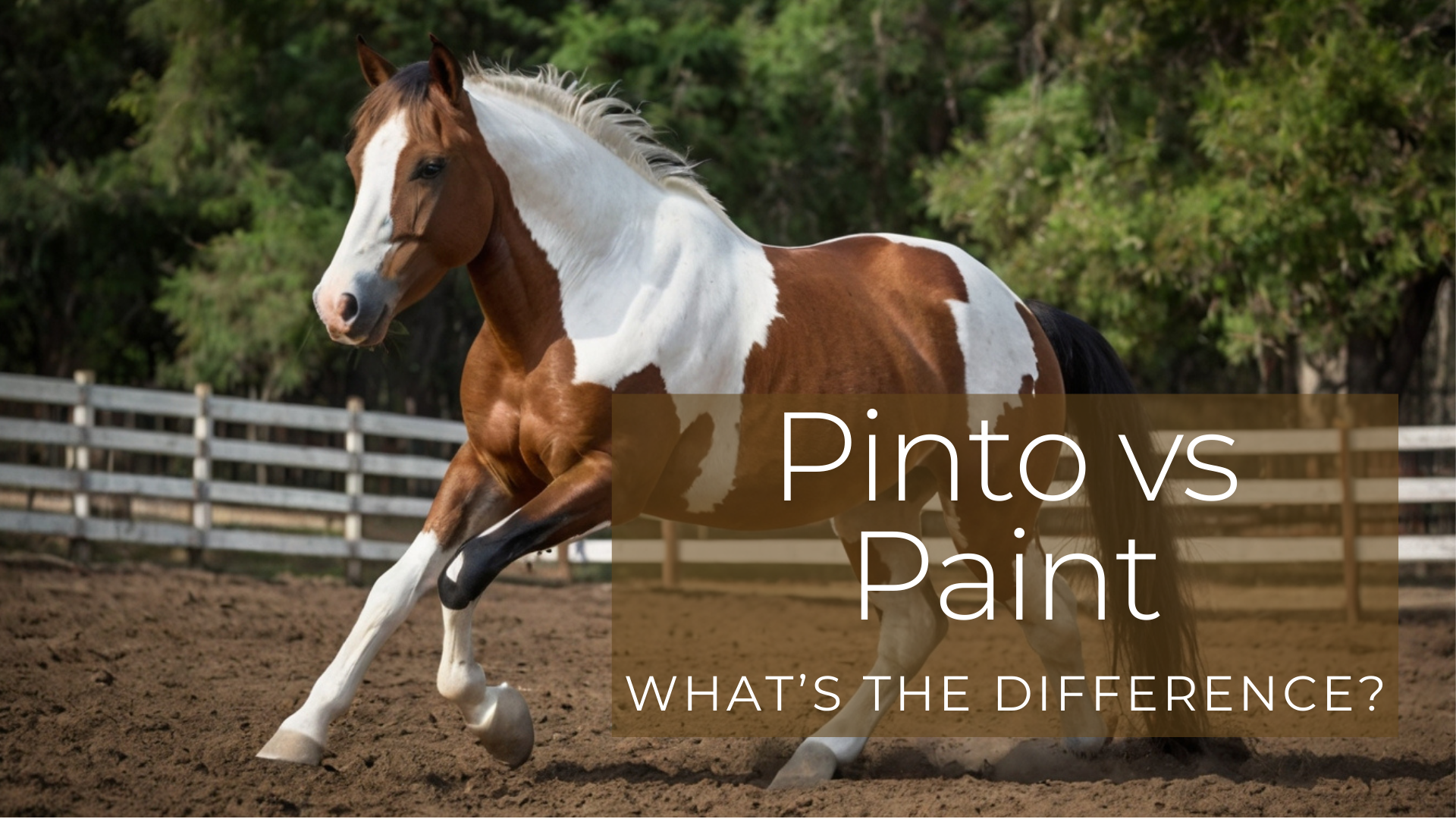
Pinto or Paint horse: These two terms are a frequent source of confusion and are often used incorrectly, even by experienced horse owners.
While the terms are often used interchangeably, we’re going to clarify the difference and finally put this debate to rest.
One and the Same: A Paint is a Breed with a Pinto Color Pattern
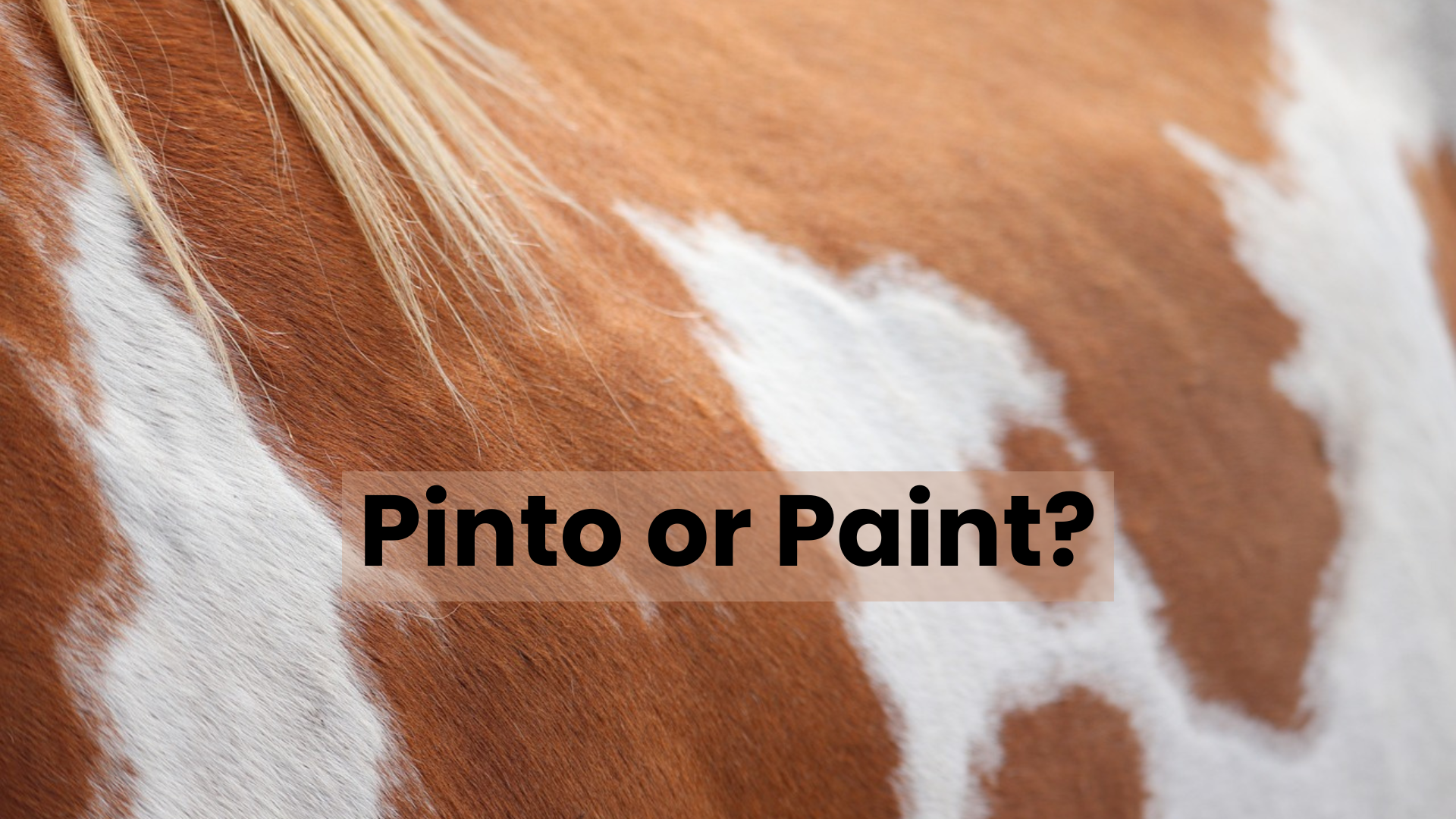
Put simply, a Paint horse is a specific breed, whereas a pinto refers to one of the many horse colors. However, the confusion is understandable because a Paint horse can display pinto color patterns.
Here is a quick overview of the differences between a Paint horse and a pinto:
| Characteristics | Pinto | Paint Horse |
| Color | Refers to a color pattern. | Display pinto color patterns or can be a solid color. |
| Breed | Can be any breed of horse. | Bloodline that includes a mix of Paint, Quarter Horse, and Thoroughbred. |
Pinto Horses and Color Variation
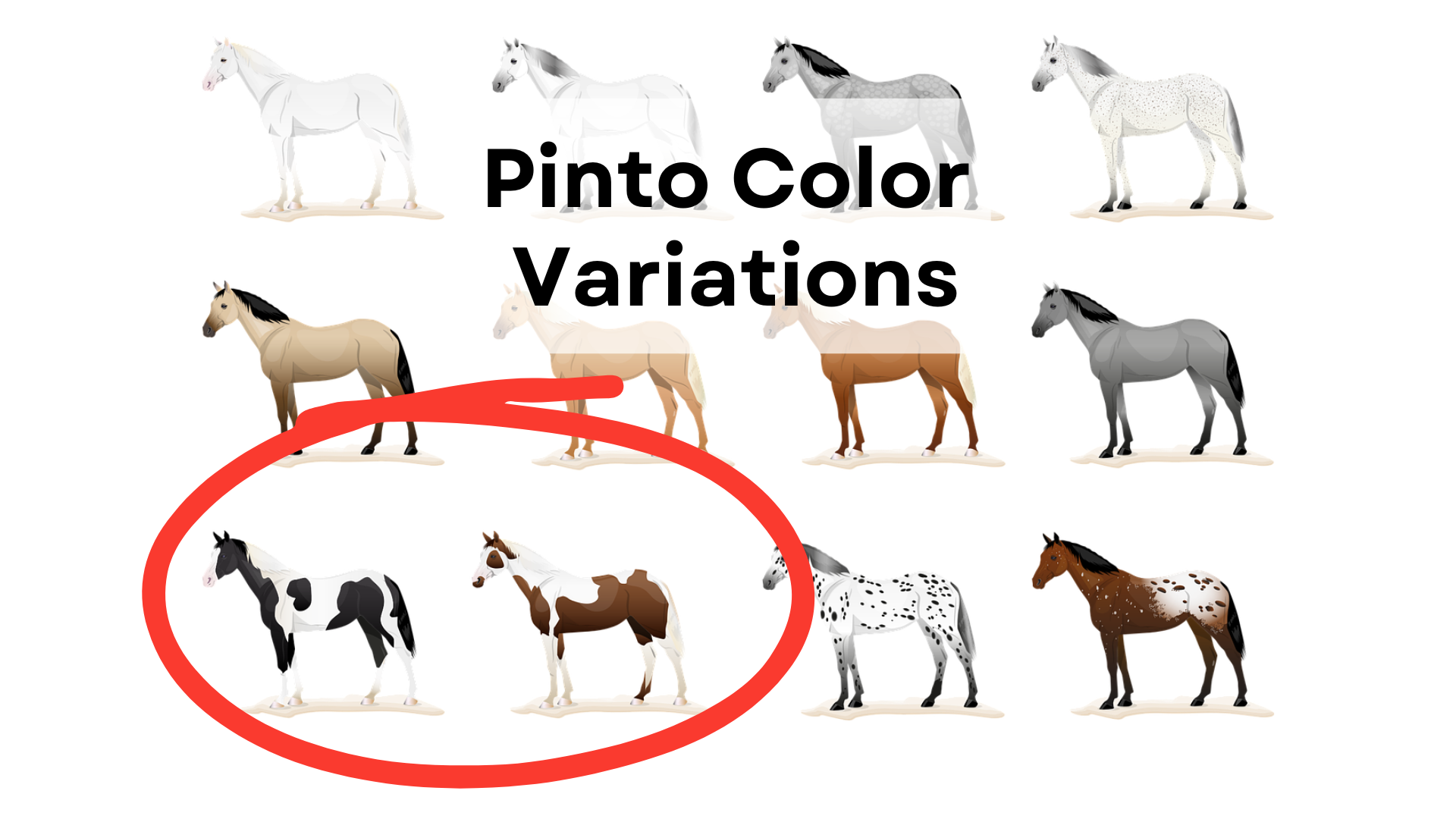
The pinto color pattern can be found across a wide range of breeds like Quarter Horses, Arabians, Mustangs, Gypsy Cobs, or even Saddlebred. For this reason, horses with pinto coloring do not share any behavioral characteristics.
Pinto colors
Pinto coat patterns are genetically distinct and are described by the base color and the pattern type.
The three colors seen in pinto horses are:
- Piebald: This is a black and white colored pattern.
- Skewbald: A skewbald is any brown color on white, for example, chestnut or bay and white.
- Tricolored: This is all three colors: black, brown, and white.
It’s also possible to see a roan pinto color, like a blue roan; however, this is a rare genetic combination.
Pinto patterns
These colors are then described by various coat patterns:
- Tobiano: The tobiano pattern is the most common due to it being a dominant genetic trait. It is characterized by splashes of color across the rump and body in a vertical pattern, with predominantly white legs. Typically, the head is colored, and the horse may also have facial markings like a star or blaze.
- Frame Overo: The frame overo pattern is characterized by jagged horizontal patches of white. The color usually outweighs the white patches, making the horse appear a solid color.
- Tovero: This is a term used to describe a color pattern that is a mix of tobiano and any other pinto pattern.
- Sabino: Sabino horses are characterized by large white patches on the face, legs, and belly. The body area can either be colored or include very little color. The edges of the color can appear ‘lacy’ rather than a solid line.
- Splashed white: Splashed white is a pattern with horizontally oriented white markings. It makes the horse appear as if it has been dipped legs first into white paint. The head will be predominantly white, and the horse will, more often than not, have blue eyes.
- Manchado: This rare color pattern is characterized by large white areas with color inside the white markings, and the horse may also have blue eyes. This pattern appears to be restricted to horses found in Argentina.
In some cases, “overo” will be used as a collective term to describe any color pattern other than tobiano.
Pinto Horse Association of America
The Pinto Horse Association of America (PtHA) will accept horses for the Color Breed Registry based on color traits, not on a bloodline basis.
The association qualifies pinto horses if they have at least four square inches of white fur with pink skin on the body. Horses that display only large patches of white fur on the face and lower legs do not qualify.
Paint Horses
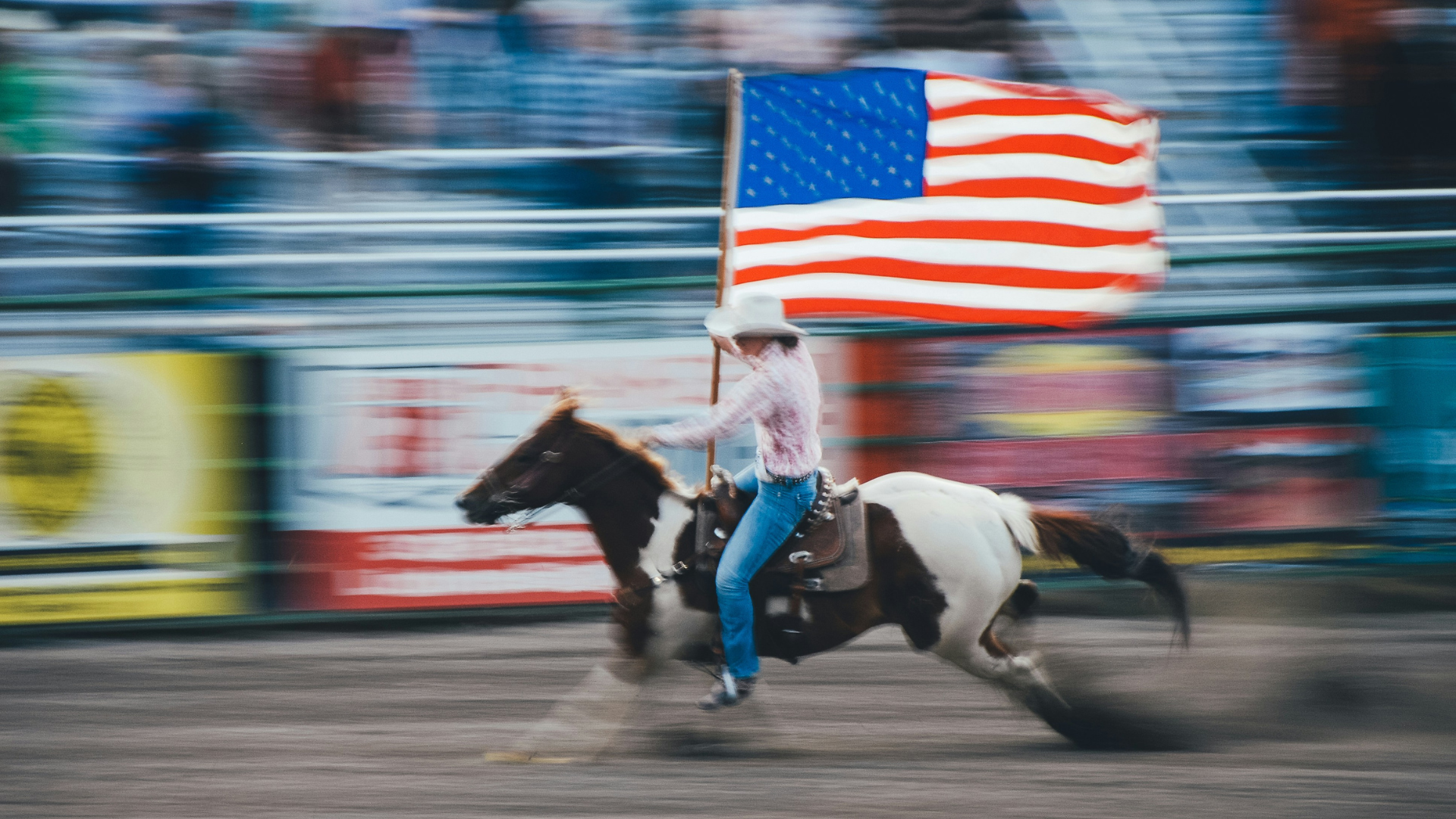
The Paint horse breed is described as a stock-type breed, typically with a pinto pattern and coloration. These horses are typically between 14 and 16 hands with a stocky, muscular build.
As a result, they are well-suited to equestrian pursuits that involve fast maneuvering and sprinting, like barrel racing and calf cutting. Their calm nature makes them a popular choice for riders of all ages and abilities, competing in a wide range of equestrian events.
American Paint Horse Association Breed Guidelines
The American Paint Horse Association (APHA) breeding standards stipulate that a Paint horse can have either a Paint, Quarter Horse, or Thoroughbred lineage. However, they must possess Paint genetic markers and some characteristic Paint coloration.
To qualify for APHA registration, a horse must have either:
- Two parents registered with the APHA: They must then have at least one Paint pattern gene and display at least one Paint pattern trait.
- One parent registered with APHA and the other either a Quarter Horse or Thoroughbred: The horse must have at least one pattern gene and two Paint traits OR one Paint trait and two Paint pattern genes.
In a lot of cases, Paint horses can be dually registered with the American Quarter Horse Association.
History of the Paint Horse
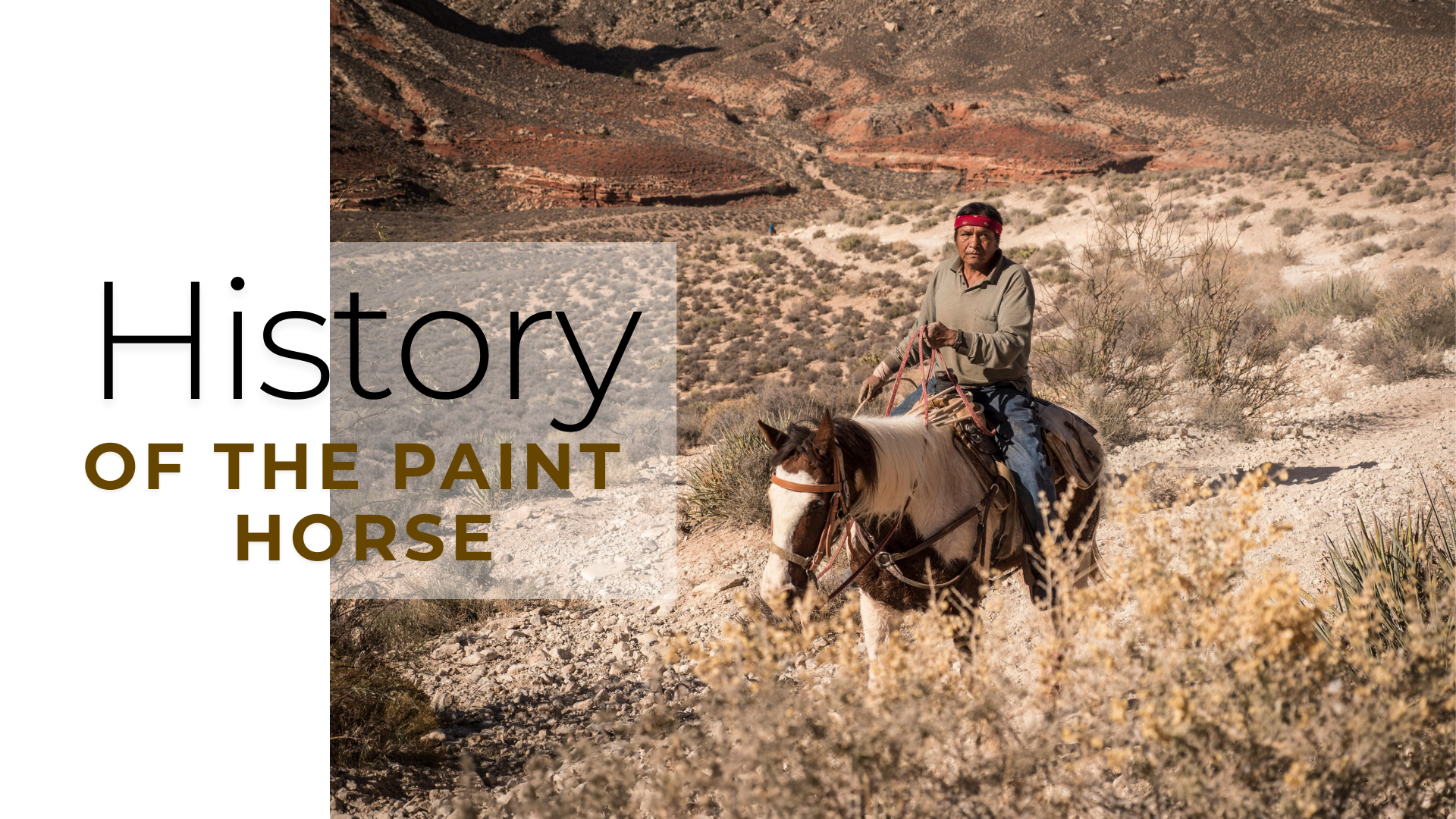
The striking pinto color gene has existed in horses for thousands of years. However, the coloration evolved in Spain through a mix of horse breeds brought to the region. These horses were later transported to the Americas.
Many of these colorful Paint horses brought to the Americas were let go and formed the basis for the American Mustang population.
Native Americans and pioneering cowboys took a liking to these hardy horses that had good cow-sense. Eventually, the Paint horse became associated with cowboys and Indians in popular culture.
Genetic Problems Associated with the Color
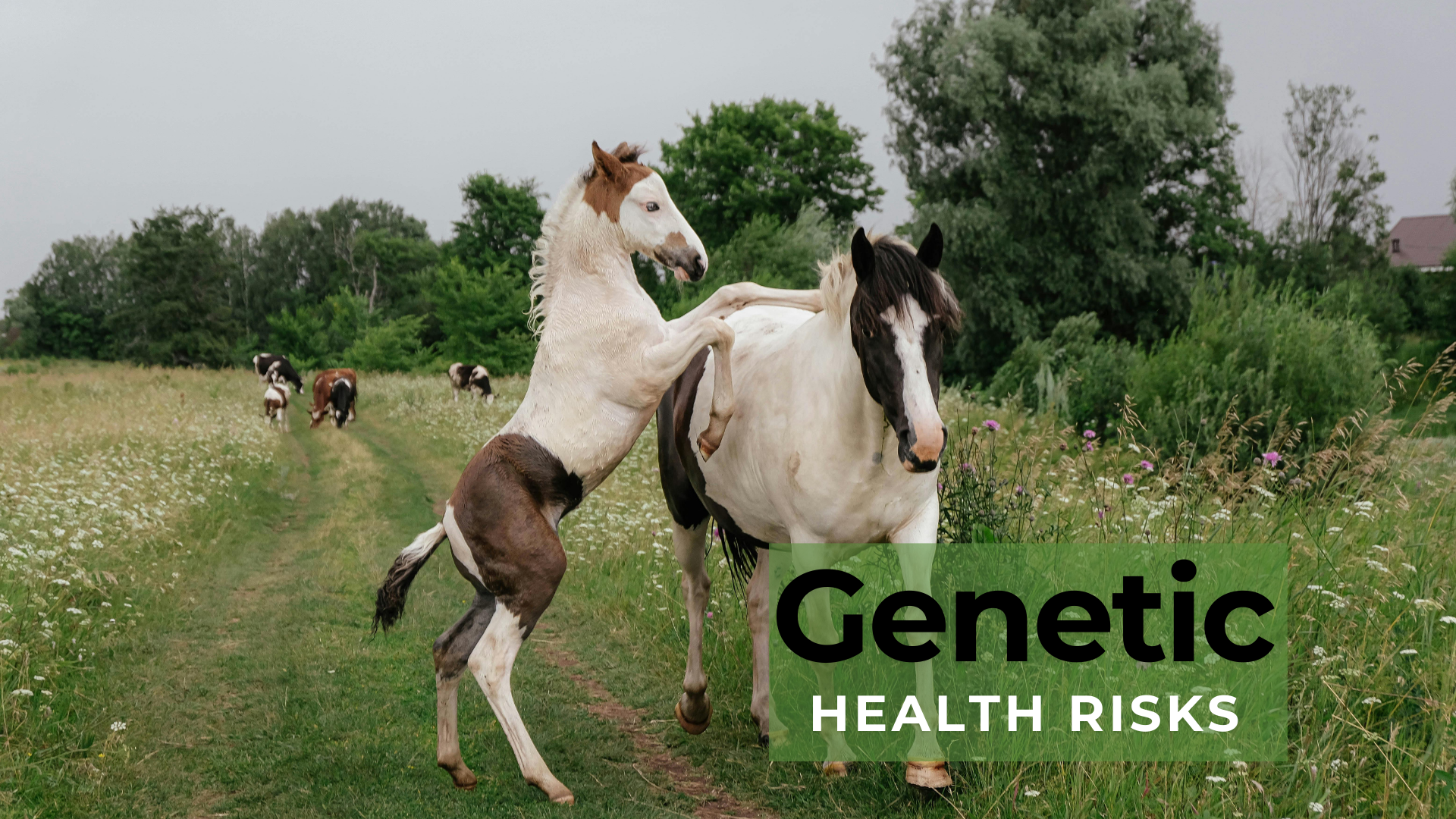
As with many domesticated animals, there are certain genetic health problems associated with selective breeding. Pinto and Paint horses can both be at risk of Lethal White Overo Syndrome (LWO).
Lethal White Overo Syndrome is caused by a genetic mutation seen in frame overo patterned horses. In these cases, foals are born with an underdeveloped intestinal tract and may also be deaf. There is no treatment available, and foals ultimately have to be humanely euthanized.
Genetic testing is available to avoid producing foals with LWO.
FAQs
Is a Paint horse the same as a pinto?
Yes and no. A Paint horse is a recognized breed standard, whereas a pinto is a color pattern. However, a Paint horse will more often than not display a distinctive pinto coat pattern.
What’s the difference between pinto and tobiano?
Tobiano is the most common of all the pinto horse coat patterns. This pattern is characterized by patches of color across the body and head of the horse but mostly white legs. The colored patches have smooth edges and are not roaned or lacy. A horse with a tobiano pattern can be either a piebald, skewbald, or tricolor.
How is a horse qualified as a Paint?
For a horse to officially be registered with the American Paint Horse Association (APHA), it must meet their breed standard guidelines – the horse must have Paint horse lineage, Paint color genes, and display at least one Paint color trait.
Final Thoughts
The pinto and Paint debate is finally clarified. The terms are all too frequently used inaccurately, and despite the similarities, they reflect either a breed or a color pattern. The next time someone brings up the topic, you’ll be equipped with all the answers.


