
How Do Wild Horses Trim Their Hooves?
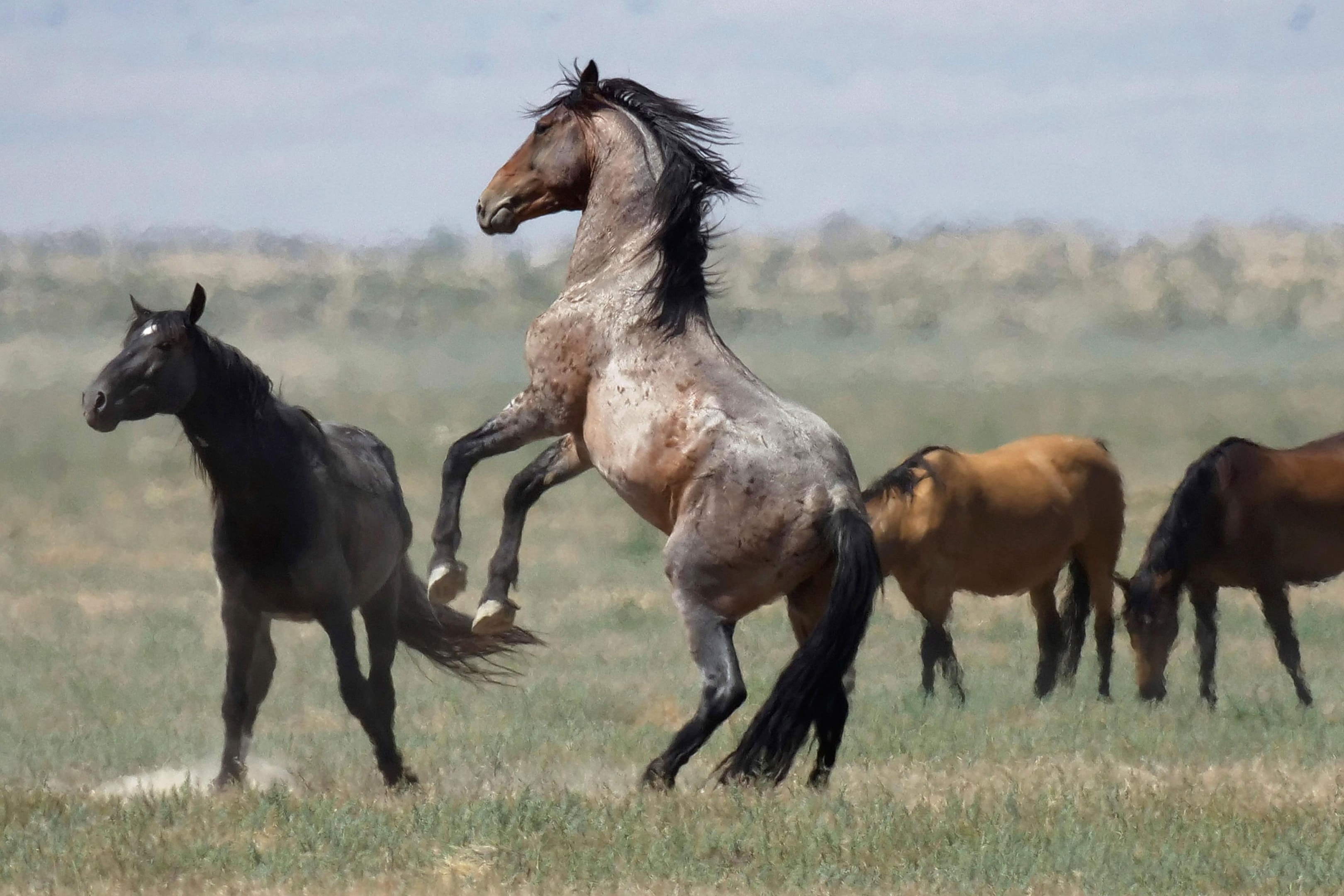
Wild horses maintain and trim their hooves naturally by roaming over various surfaces. However, a couple of other factors influence this process, and there are some key differences between domestic and wild horses when it comes to their hoof health.
In this article, we’ll explore this topic in some more detail.
How Do Wild Horses Trim Their Hooves?

Let’s explore how exactly wild horses trim their hooves in comparison to domestic horses.
Wild horses
Wild horses roam around freely all day, usually over rough terrain, which allows them to maintain their hooves just by moving around.
The surfaces they move on provide an added level of abrasion that domestic horses aren’t always exposed to, allowing wild horses to naturally maintain their hooves.
In turn, this makes wild horses’ hooves healthier than those of many domestic horses.
Additionally, through natural selection, wild horses’ hooves evolve to fit their environment. While these changes often aid the horse’s movement, they could also cause some problems.
- Wet and softer terrain: In areas that contain more wet and softer ground, wild horses develop wider or more flared hooves. If the hooves are too flared, they can chip, which can be painful for the horse.
- Rough terrain: Horses that live in areas with rough terrain develop smaller and harder hooves with rounded edges. The rounded edge of a hoof is also referred to as a “Mustang roll”. This type of hoof is less likely to chip; however, it is also subjected to traumatic laminitis, which occurs when the foot bone presses into the hoof.
However, in either case, wild horse breeds are less likely to exhibit lameness or a loss of mobility due to these issues.
Domestic horses
On the other hand, domesticated horses don’t move around as much as they are usually kept within the confines of their ranch. Unless they are part of an establishment that requires riding the horses, they don’t really have to do anything that would be too demanding on their hooves. As such, their hooves usually don’t wear down as quickly as wild horses’ hooves.
Some domestic horses may also require hoof supplements to maintain healthy hooves.
Domestic horse’s have their hooves trimmed by farriers, who are professionals that produce horse shoes and help maintain horses’ hooves. However, there are some instances where domestic horse owners trim their horse’s hooves if they have the knowledge and experience to do it.
The Factors That Impact How Wild Horses Trim Their Hooves

There are a few mechanisms that play into how wild horses trim their hooves. We can sum them up as the following:
- Types of terrain and the related wear and tear of the hooves: Throughout their lives, wild horses travel through various types of terrain. Whether hard or soft, the ground they move on acts as a natural file, shaping and developing their hooves as they go. Rough terrain is better at shaping a horse’s hooves, helping them prevent flaring and splits.
- Traveling long distances: Wild horses generally travel longer distances in search of food and water. This constant movement also helps file down and shape their hooves, allowing them to naturally maintain them in a way domestic horses can’t.
- Digging and other forms of induced abrasion: Not only do the terrains themselves shape a wild horse’s hooves, but also their own natural movements. At times, wild horses will dig the ground for water or may rub their hooves against hard surfaces, helping shape and naturally wear them down.
- Seasonal changes and moisture levels: Moist terrain will cause a horse’s hooves to grow more quickly, while dry conditions slow the flaring. Dry ground also tends to be harder, helping horses wear down their hooves. As such, along with the vast terrains they traverse, weather conditions like snow and rain can also shape their hooves.
- Herd dynamics: Within a herd, dominant horses tend to move around a lot more than others. So, whether a horse exhibits dominant or submissive behaviors in a herd can also have an effect on how their hooves are trimmed.
Why Should a Horse’s Hooves Be Trimmed?
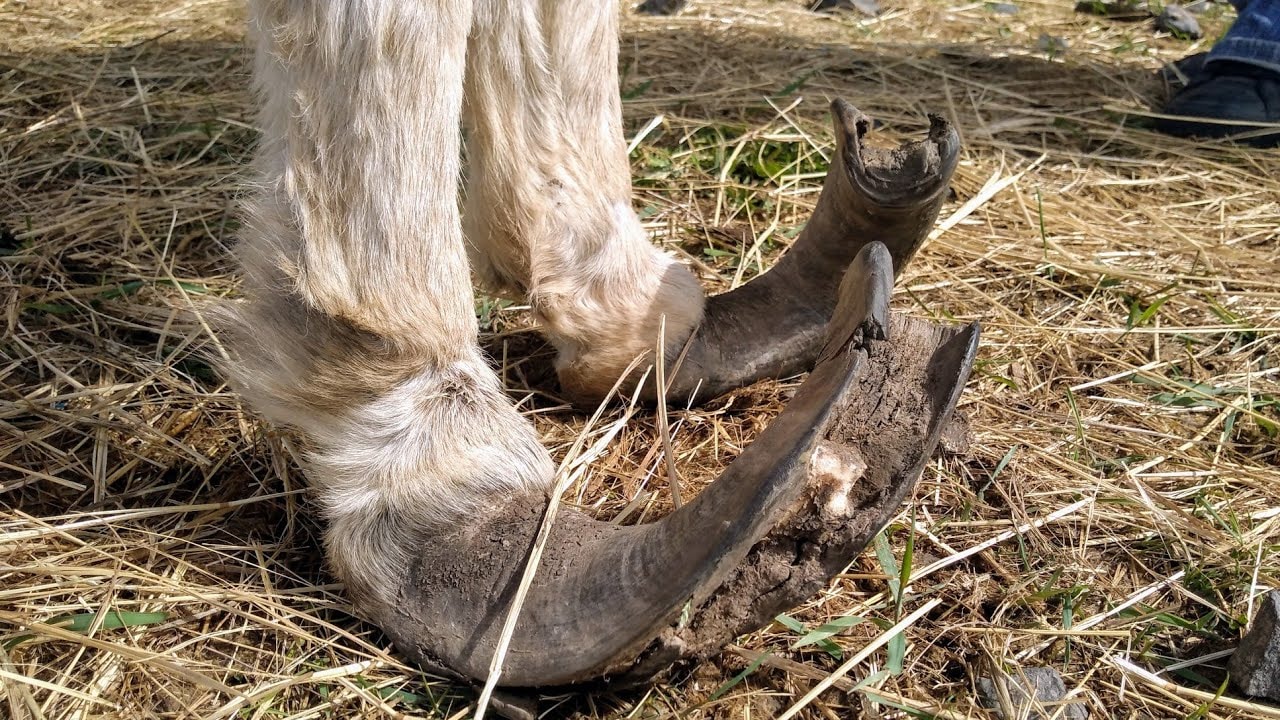
Having trimmed and well-maintained hooves is essential to the overall health and mobility of horses. The specific reasons why horse’s hooves need to be trimmed include the following:
- To prevent overgrown hooves, which could result in mobility or balance issues.
- To prevent cracking and splitting that could lead to infections.
- To prevent deformations in the structure of the hoof.
- To provide traction – trimmed hooves are much better at walking on slippery surfaces.
- To prevent bacterial and fungal infections.
FAQs
Do wild horses get overgrown hooves?
Yes, it is possible for wild horses to get overgrown hooves if are immobile enough, but a healthy adult wild horse would rarely get overgrown hooves.
Do horses enjoy foot trimming?
They may not enjoy the process but rather the results. Trimming a horse’s hooves should feel no different for the horse than the feeling of humans trimming their nails. There are no nerves and blood vessels in the areas that are supposed to be trimmed, so the trimming process itself shouldn’t feel like anything.
Why do horses need shoes but not wild horses?
We use horseshoes to protect domesticated horses’ hooves from splitting, chipping, and other forms of external damage. Wild horses adapt to the demands of rough terrains and develop stronger hooves. A wild horse’s diet also tends to provide more of the minerals, proteins, and vitamins the horse needs to strengthen its hooves.
Final Thoughts
Unlike domestic horses that don’t move around too much on various terrains, horses in the wild do, giving them the opportunity to trim their hooves naturally. The constant movement over various types of land acts as a natural file, helping horses develop their hooves and avoid various health complications (although not all). Coupled with natural selection, this allows wild horses to develop strong and healthy hooves that can withstand the demands of their natural environment.


