
30+ Powerful War Horse Names
Throughout history, war horses have been a powerful force behind the expansion of civilizations. They carried warriors, kings, and gods into many perilous battles, and provided companionship in the toughest of times.
Find inspiration for your horse’s name from our selection of carefully researched and totally badass war horse names.
Mythical War Horses
- Llamrei: King Arthur’s mare; Llamrei is always described as being a big, strong horse and was crucial in helping King Arthur slay the Afanc Lake monster.
- Sleipnir: The eight-legged grey ridden by Odin, the Norse god of war and the dead. According to Norse mythology, Sleipnir’s eight legs enabled him to carry a rider between the world of the living and the dead.
- Balius and Xanthus: Achilles’ immortal horses from the Trojan War. There are theories that Balius means “dappled” and Xanthos meaning “blonde” refers to the coat colour of the two horses.
- Hippocampus: This sea horse pulled Poseidon’s chariot in Greek mythology. He is usually depicted with half the body of a horse and half of a fish.
- Pegasus: Possibly one of the most famous horses is Pegasus. This glistening white stallion with wings often features in Greek mythology. Pegasus was tamed by Bellerophon and ridden into numerous battles.
- Tulpar: Tulpar is the name given to the legendary horse in Turkic folklore and depicted in many Central Asian nations. This winged horse holds a special place in the heart of these nomadic warriors.
- Chollima (Qianlima): This winged horse is mentioned in East Asian cultures and is described as swift and elegant. In Chinese and Korean culture, it’s common to refer to exceptionally talented people as “chollima”.
Want to see more like these? Have a look at some medieval horse names.
Famous War Horses
- Bucephalus: Legend has it that Bucephalus was unrideable. Alexander the Great was able to tame Bucephalus by turning his head towards the sun so he could no longer see the shadow he was scared of. Alexander rode Bucephalus in many epic battles until his death. The horse was almost jet black with the exception of a white star and striking blue eye wall.
- Incitatus: The favourite and prized war horse of Roman Emperor Caligula. Incitatus means “swift,” and the horse supposedly lived in a marble stable and ate from an ivory manger.
- Copenhagen: The Duke of Wellington’s horse which he rode for the Battle of Waterloo. Copenhagen was not tall, standing only 15 hands high, but with a muscular build. Nor was he handsome; however, he had excellent endurance owing to his Arabian bloodlines.
- Marengo: The famous horse of Napoleon Bonaparte. This iconic grey had Arabian heritage and was imported from Egypt to be Napoleon’s horse. He stood at just over 14 hands but was described as a reliable and steady mount – perfect qualities for a war horse.
- Traveller: One of the most notable horses from the American Civil War and General Robert E. Lee’s favourite. Traveller was a handsome and well-bred dappled grey who won Lee over at first sight. He was described as eager to please and could maintain a fast pace without any encouragement.
- Warrior: The famous cavalry mount of Captain Jack Seely enduring the full course of World War I. This horse endured the worst of the fighting and was regarded as “the horse the Germans could not kill”.
- Bill the Bastard: This famous horse gained a reputation amongst Australian light horsemen during World War II. Bill was a generally unremarkable-looking chestnut, but was tall, strong, and notoriously difficult to handle. Bill heroically carried his owner through gunfire daily and, on one occasion, delivered his unconscious rider safely to receive medical aid.
Male War Horse Names
- Aegis: Meaning shield or protection, Aegis was ridden by Zeus and many other Greek gods into battle. It’s a strong name for a tall, athletic horse.
- Ares: Named after the Greek god of war, Ares represents fierce combat and battle prowess.
- Blitz: This name conveys a rapid speed and sudden, decisive attacks. It would make a great name for a nimble little horse.
- Captain: This is a classic name for a war horse with a steady nature and a gentle disposition.
- Cavalier: This name is in reference to the mounted guards and has a very regal feel – perfect for a gallant, handsome horse.
- Crusader: Inspired by medieval knights who crusaded to the holy lands atop their mighty mounts.
- Drakkar: This is a unique name inspired by Viking longships. It evokes a toughness that the Vikings developed.
- Fury: Full of fire and might, Fury would be great for an all-black horse with a bit of go.
- Gallant: Gallant means bravery and chivalry – a good fit for a calm horse with a steadfast nature.
- Hannibal: This famous Carthaginian general was a strategic genius in the art of war. In 218 BC, he famously marched an army of 38,000 infantry, 8,000 cavalry, and 38 elephants across the Alps to take victory. Hannibal had strong leadership skills and would be a great name for a clever mount.
- Patriot: A patriot is a fighter with strong devotion to their cause or country, willing to make sacrifices. A horse with the name of Patriot should be willing and attentive to their rider.
- Spartan: This name reflects the discipline, strength, and resilience displayed by the warriors of ancient Sparta. A horse named Spartan would have great endurance.
- Valour: This name embodies the spirit of a fearless and brave warrior in battle.
Female War Horse Names
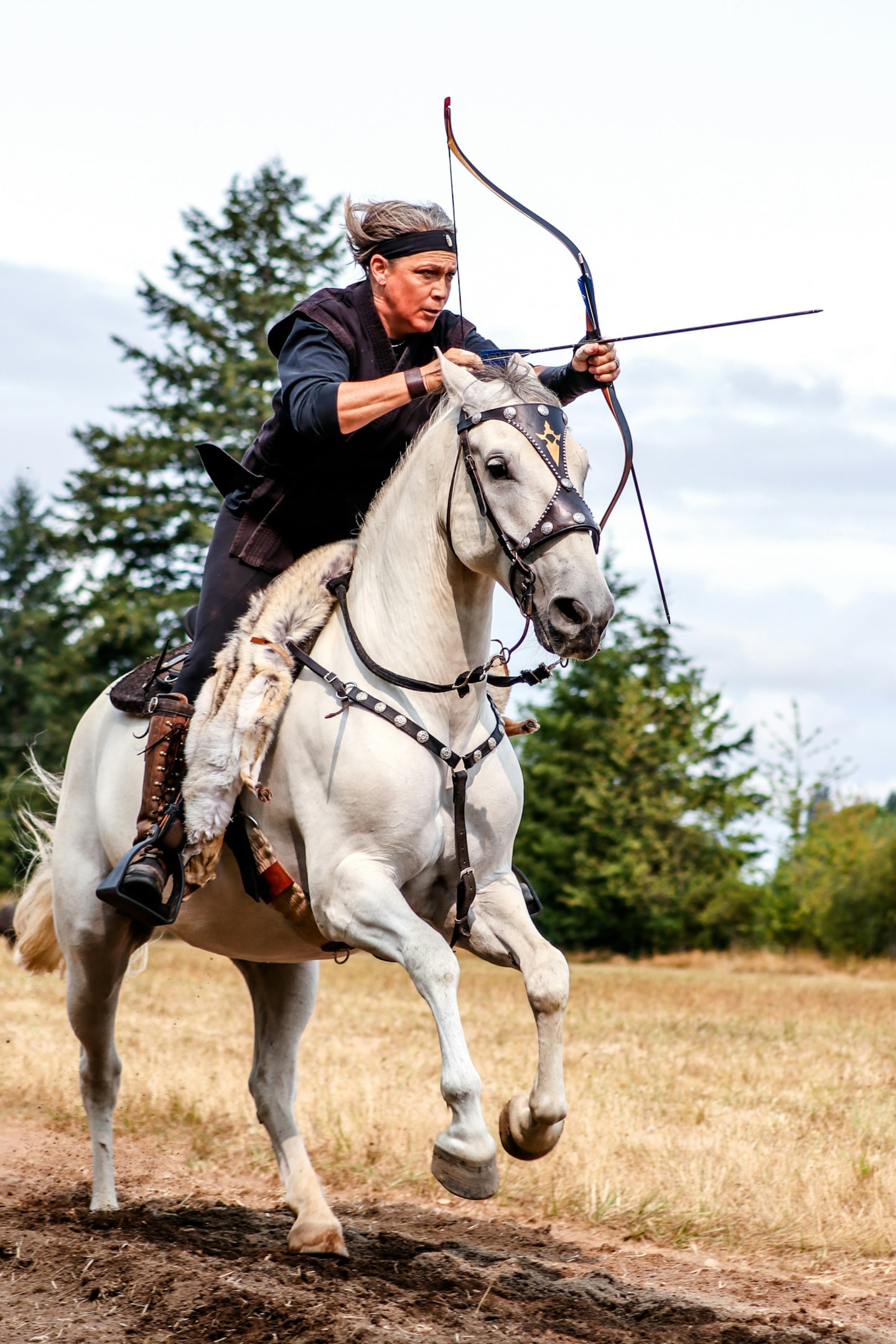
- Al-Kahina: A warrior woman of the Numidia region who fought against both Islamic conquest and French colonisation.
- Artemis: The goddess of the hunt and wild animals is the perfect name for a free-spirited mare who enjoys being out on the trails.
- Athena: Athena – Greek goddess of war – is one of the strongest female war horse names.
- Bellatrix: This word means “female warrior” in Latin and would be ideal for a spirited mare with a bold, fiery personality.
- Epona: Is the name of the horse in the Legend of Zelda as well as the name of the Celtic goddess of horses and protection. In the series she’s known for great speed and reliability.
- Freya: This is the name of the Norse goddess of love, beauty, and fertility. The Vikings were renowned for their warrior women, and this name stands out as a great pick for a female war horse.
- Helios: This name comes from the Greek sun god. It would suit a mare with a radiant spirit and a golden coat colour.
- Imara: Meaning “strong” in Swahili, this is a unique name for a mare who displays a willingness to tackle any challenge head-on.
- Joan: Inspired by the famous Joan of Arc, the patron saint of France.
- Juno: Named after the Roman queen of the gods, symbolizing power and protection. It would be a nice name befitting a mare with elegance.
- Kali: Named after the Hindu goddess of destruction and rebirth. This name would suit a dark coloured horse with a feisty personality.
- Nyx: Inspired by the primordial goddess of night, it’s a great name for a jet black mare.
- Teuta: The Illyrian pirate queen who commanded a large fleet of ships looting Greek and Roman cities is suitable for a spunky mare.
- Valkyrie: The Norse warrior maidens, this name symbolizes bravery and battle prowess.
- Xena: From the TV show “Xena the Warrior Princess,” this name would suit a mare with a bold and charismatic personality.
- Zarya: A Slavic goddess of dawn and protection, this is another great name for a mare with a warm coat colour and a warm nature.
FAQs
What is the best name for a war horse?
The best name for a war horse will draw inspiration from the horse’s personality and coat colour. But, above all, the name should resonate power and strength.
What is the most famous war horse in history?
The most famous war horse throughout history is open for debate, but the top spot could go to either Bucephalus or Marengo. Both were strong, loyal horses – despite their size differences.
Did Vikings name their horses?
Horses were revered by Vikings and have often been found in burial mounds with their masters. Given this sign of attachment, it’s likely that Vikings did name their horses. Names were probably based on the horse’s traits, personality, or role in the community.
Final Thoughts
Naming your horse is an important decision. You want the chosen name to honour the qualities of strength, courage, and loyalty that these animals embody. Certainly, you will have found a name in this list that fits your heroic steed perfectly.


