
Buckskin vs Dun Horse: Explaining The Difference

Many people believe buckskin and dun horses are one and the same, and it’s easy to confuse them. After all, both buckskins and duns often have similar golden coats with handsome dark manes.
While some people mistakenly believe ‘buckskin’ is just American for ‘dun’, there are clear differences between the two horses. Let’s uncover what sets these horses apart and explore why both are so popular within the equine world.
What Is A Buckskin Horse?
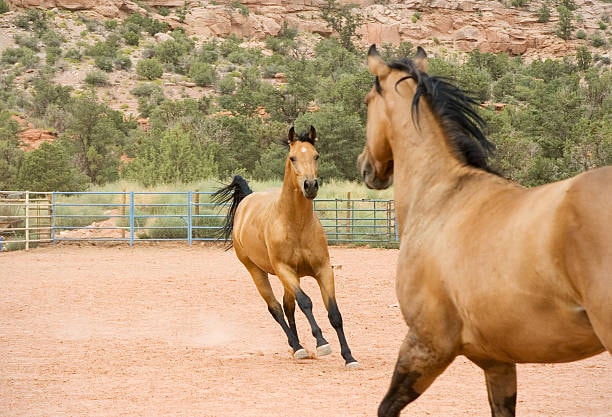
A buckskin horse is a bay horse with one cream dilution gene. Bay horses usually have a brown or reddish-brown appearance.
In a buckskin horse, the cream gene dilutes the base bay coat to produce a lighter coloring. While the exact shade varies, the most common buckskin tones are:
- Cream
- Buttermilk
- Light tan
- Darker tan
- Light gold
While the buckskin horse’s coat is light, its points – mane, ear tips, tail, and legs – are typically black or dark brown. This produces the striking contrast that makes buckskin horses appealing.
Note: A buckskin is not a breed of horse. The term refers to the horse’s genetics and coloring.
What Is A Dun Horse?
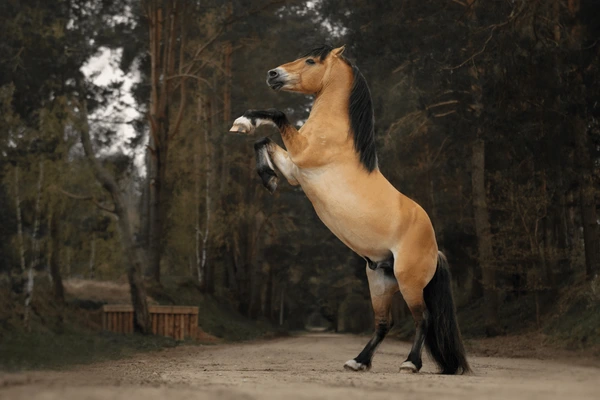
Like buckskins, dun horses also have a unique gene – called the dun dilution gene. The dun gene changes a chestnut, black, or bay base coat to produce the following common dun types.
- Bay dun: The bay dun horse is the “classic” dun, recognized by its soft yellow, tan, or gold coat. Its mane, legs, and tail are often dark (buckskin and bay dun horses are most commonly confused because they look the most alike).
- Red dun: Red dun horses, sometimes known as claybanks, come in light chestnut to dark red shades. Their manes and tails are often reddish too.
- Black dun: The black or blue dun is the rarest of the dun variants. The presence of the dun gene gives the horse a blue or silvery-black appearance. This type is also known as a grullo or grulla and they sport a dark mane and tail.
You may have heard that dun horses have primitive markings. Images of dun horses appear in early cave paintings dating back to the Stone Age. But what exactly are these primitive markings? The four main markings found on modern dun horses are:
- Stripes on the shoulder
- Horizontal “zebra” stripes on the legs
- A dorsal stripe on the back
- A “cobweb” pattern on the forehead
Note: Dun is not a horse breed but refers to the animal’s color.
How To Tell the Difference Between a Dun and a Buckskin Horse
Spotting the difference between buckskins and bay dun horses can be tricky if you don’t know what to look for.
Here are six common differences between dun and buckskin horses:
- Dorsal stripe: The easiest way to tell a buckskin and bay dun horse apart is to check for a dorsal stripe. If the horse has a dark dorsal line running down its back to its tail, you’re almost certainly looking at a dun.
- Black points: A buckskin’s mane and tail are usually solidly dark. By contrast, a dun horse’s mane and tail may include light hair strands, creating a frosted look.
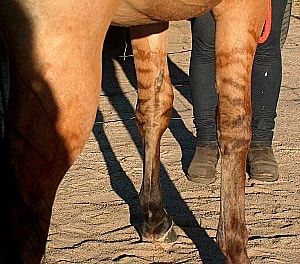
- Legs stripes: Carefully inspect the horse’s legs for horizontal stripes. A dun horse often displays (sometimes faint) dark horizontal lines on or above the knees. These are known as zebra or tiger stripes and are part of the animal’s primitive markings.
- Cobwebbing: Check the horse’s forehead for a pattern of light hairs resembling a cobweb. Such webbing indicates that the horse may be a dun. Not all duns have cobwebbing, and the patterning may be quite faint.
- Coat color consistency: A buckskin usually has a more uniform, consistent coat color, while a dun’s shade may vary across the body.
- Shoulder stripes: Striping on the shoulders is more common in dun horses than buckskins.
What Are the Best Buckskin and Dun Horse Breeds?
Let’s explore the best buckskin and dun horse breeds.
Buckskin breeds
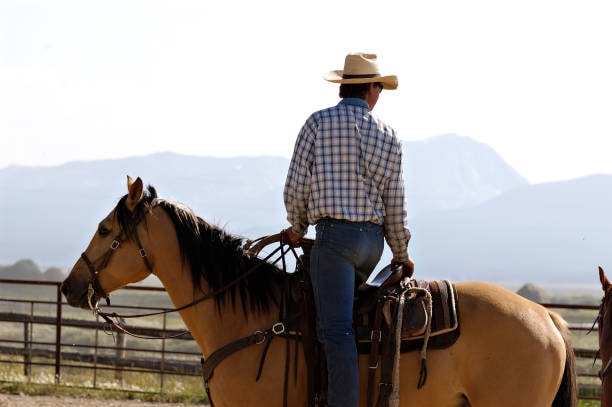
The buckskin color is found in several breeds. The most popular and well-regarded include:
- American Quarter Horse – a versatile breed known for its athleticism and calm temperament. It’s classified as one of the best horse breeds for jumping.
- Morgan Horse – a popular horse due to its intelligence, athleticism, and attitude.
- American Paint Horse – showcasing striking color patterns (including buckskin), this breed is equally suitable for showing and pleasure riding.
- Mustang – a legendary breed associated with wild herds, the Wild West, and trail riding.
- Welsh Pony – a hardy, good-natured breed that can be a fun ride in many different settings and disciplines.
Dun breeds
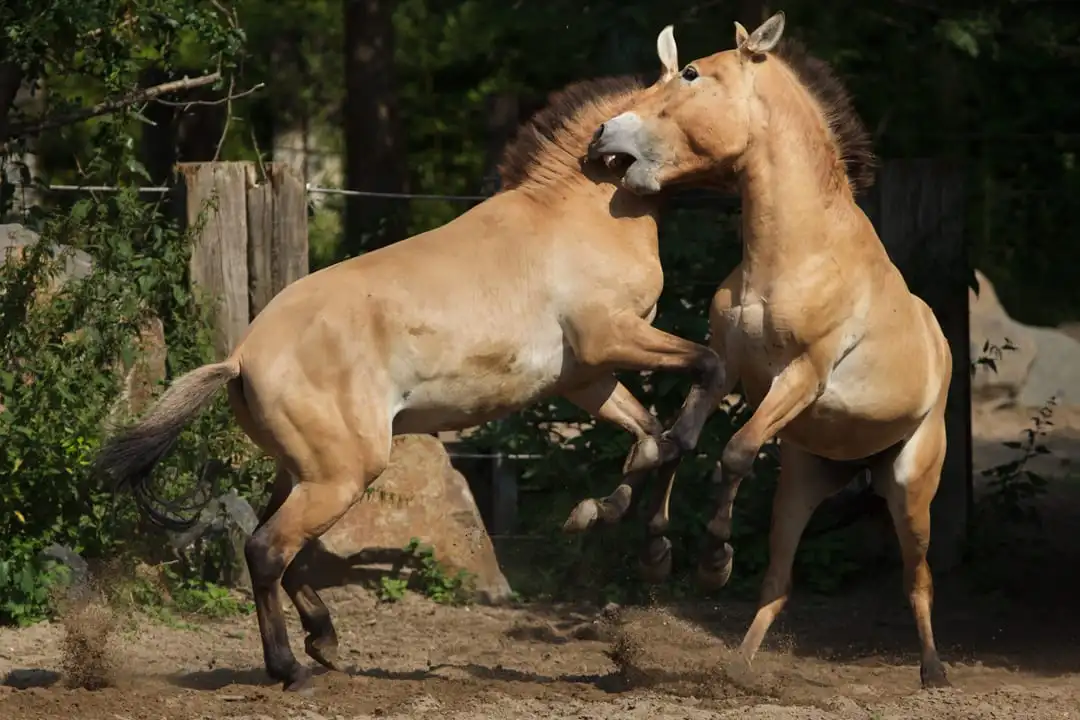
The top dun horse breeds include:
- Fjord Horse – recognized by the dun’s distinct dorsal striping, the Norwegian Fjord is a hardy, sure-footed, and gentle horse.
- Przewalski Horse – a rare, endangered, and untamed breed that has survived for thousands of years thanks to its resilience.
- Icelandic Horse – a small horse that resembles a large pony and boasts the unique tölt (four-beat lateral) gait, making it one of the best horse breeds for riding for children.
- Mustangs and Quarter Horses – these breeds also come in dun variants.
Buckskin vs Dun Horse – Which Is the Best for You?
You may be drawn to a horse’s cream or gold coloring, but there are more important considerations than coat color when choosing your ideal riding partner. When choosing a horse to match your riding goals and abilities, you also need to consider crucial factors, such as:
- Breed
- Temperament
- Size
- Experience
- Athletic abilities
Dun and buckskin coats are found among several excellent breeds. Experienced riders may enjoy a lively American Quarter. Alternatively, a Fjord can be a good fit for beginner riders wanting a dun horse.
FAQs
Do buckskin and dun horses need special care?
Buckskin and dun horses don’t need any special care compared to other horses. That said, their light coats tend to look dirtier than those of darker horses, so more regular sponging down and bathing may be necessary to ensure they look their best.
Proper feeding, grooming, and exercise will help keep your buckskin or dun healthy and happy. Regular vet checkups should also be part of the care regime.
Do buckskin horses have a dorsal stripe?
Buckskin horses typically don’t have dorsal stripes. Some buckskin may look like they have a dorsal stripe due to countershading or faint markings that resemble the appearance of a stripe.
How do you tell if a horse is a dun?
Dun is a lighter coat color (caused by a dun dilution gene), usually in combination with a darker head, lower legs, mane, and tail. Dun horses also havedistinct markings, including a dark dorsal stripe, barring of the legs, and shoulder stripes.
Why are buckskin horses so expensive?
Buckskin horses can be expensive because their unique coloring makes them highly sought after. In addition,many breeds with buckskin colors, such as Morgans,Quarter Horses, and Welsh Ponies,are prized for being strong, friendly, and hard-working horses.
Final Thoughts
Buckskin and dun horses often look alike, but they are fundamentally different due to their genetics. Understanding their makeup will help you recognize the differences between the two.
You may prefer the buckskin’s midnight-black mane to the dun’s frosted tresses. Or, you may appreciate the dun’s intriguing primitive markings. The choice is up to you!

