

Cremello vs Perlino Horse: Explaining The Differences
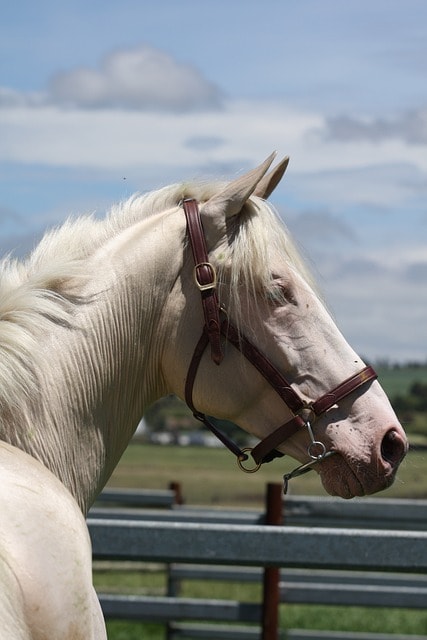
Cremello and perlino are not the names of two different horse breeds but rather the names of two different coat colors. Additionally, to the untrained eye, they may be hard to distinguish from one another, which is probably why many individuals get them mixed up.
That’s why, in this article, we’ll explain the similarities and differences between these two color variations, and the genetic factors behind them.
Genetics of Cremello and Perlino Horses
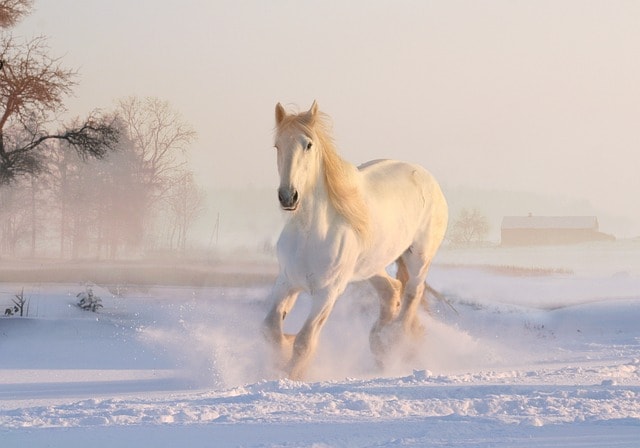
Cremello and perlino horses are identified by their ethereal white coats. Both coat colors are strikingly pale because their base color gene has been diluted to the extent of almost appearing white by the cream gene.
We also refer to these coat colors as double dilutes because the base color gene is impacted twice by the cream gene.
Let’s go explore what the cream gene is and how it works.
Cream gene
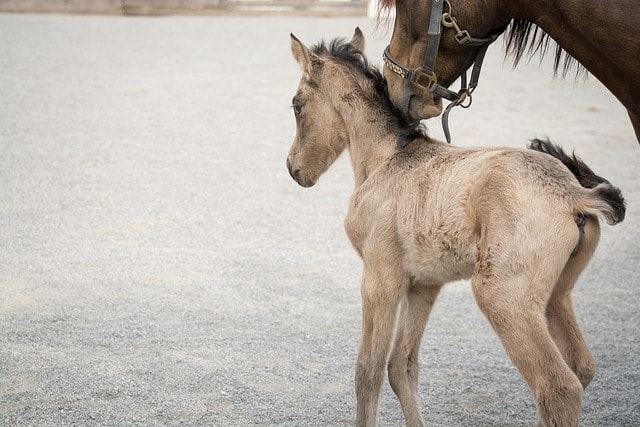
The cream gene is responsible for coat color dilution in horses. It’s a dominant gene, which means that it expresses itself more strongly than a recessive gene, and can significantly impact the horse’s coat color once inherited.
The cream gene lightens the base coat color of the horse, resulting in lighter varieties. Depending on how many cream genes the horse carries, as well as the base coat color of the horse, the horse’s coat color may range from palomino, the darkest variant, to cremello or perlino, the lightest variant.
One copy of the cream gene lightens a horse’s base coat into the following colors:
- Chestnut to palomino
- Bay to buckskin
- Black to smoky black
When two copies of the gene are inherited, a horse’s base coat is lightened into the following colors:
- Chestnut to cremello
- Bay to perlino
- Black to smoky cream
Double dilutes
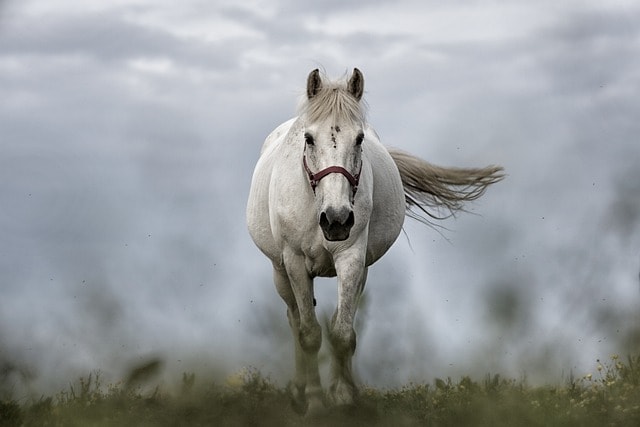
If both parents of a horse have the cream gene, their offspring will be a double dilute. A double dilute, in this case, refers to a horse with two cream genes. Since both cremello and perlino horses carry two cream genes, they are considered double dilutes. Smokey cream horses are also double dilutes, which is why they appear closer to white than black – their base coat color gene.
Double dilutes feature some physical attributes that make them look like albinos. Apart from having near-white coats, the color of their skin and eyes are also lightened by the cream gene. This is why cremello, perlino and smokey cream horses often have pink skin and blue eyes.
Due to these common attributes, there are a lot of similarities between cremello and perlino horses.
Similarities Between Cremello and Perlino Horses
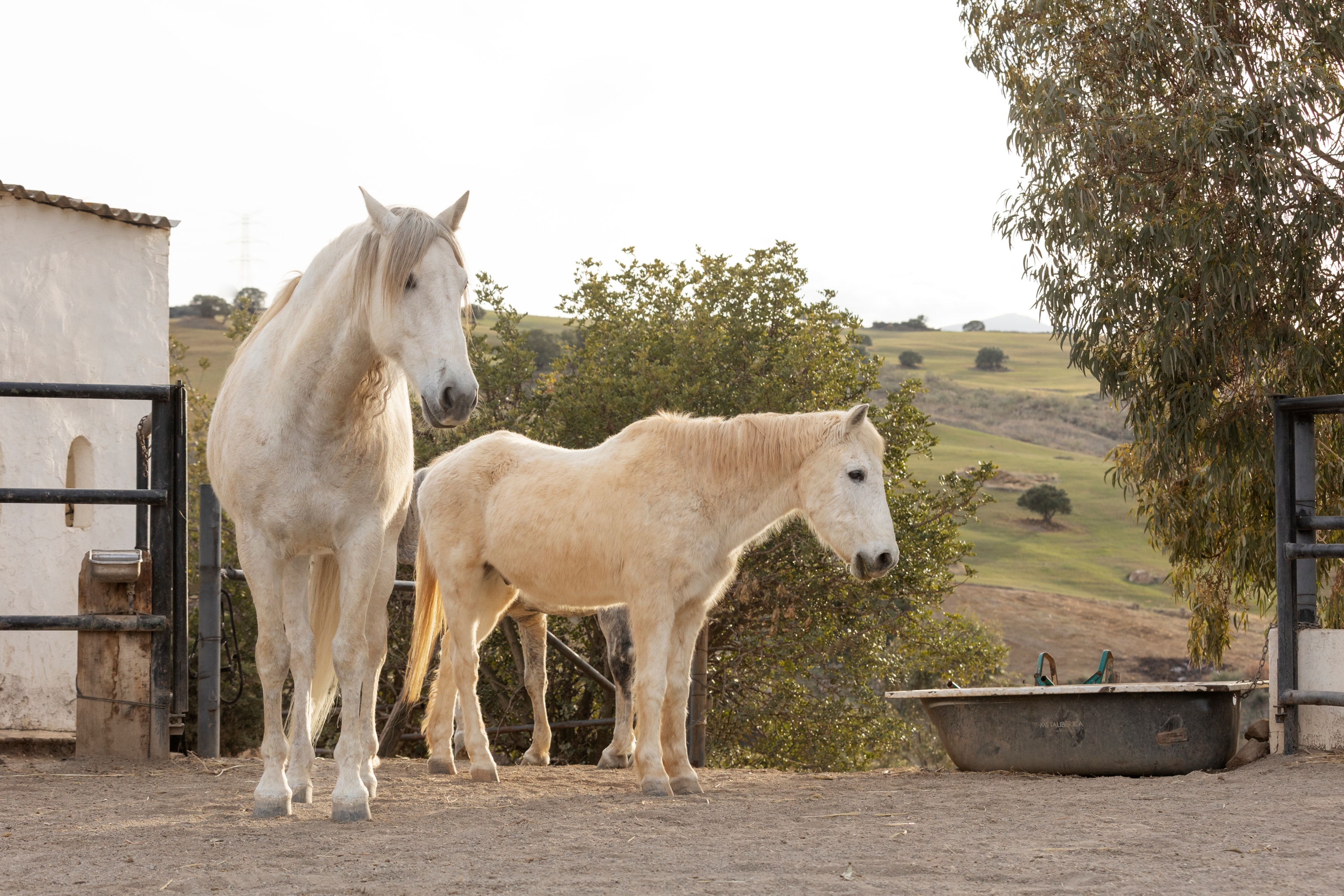
The similarities between cremello and perlino horses are the following:
- Both cremello and perlino horses are double dilutes, meaning that they carry two copies of the cream gene.
- Both have very pale, almost ivory or white colored coats. While there may be slight tone differences, they’re not so noticeable to the untrained eye.
- Both have pinkish skin and striking, light blue eyes.
- Both will pass one cream gene to their offspring, making it very likely for them to also be either single or double dilutes.
- Both cremello and perlino horses are highly sensitive to sunlight. Therefore, protecting them from direct sunlight is an essential part of caring for them.
We can observe that the similarities are mainly caused by the cream gene. That being said, cremello and perlino horses also have various differences.
Differences Between Cremello and Perlino Horses
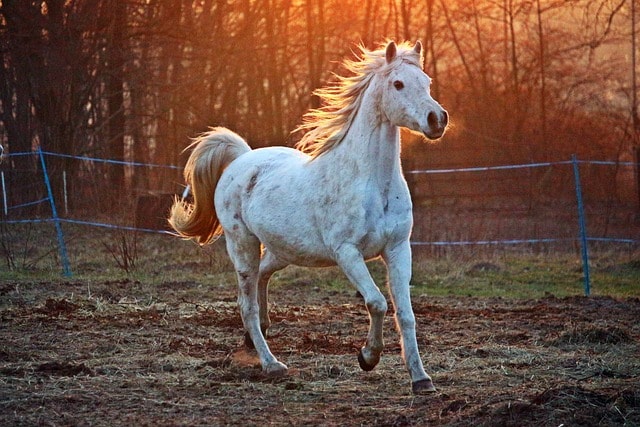
The main difference between these horses is that they feature different base coat color genes.
- The cremello coat color is a double dilute of a chestnut base coat.
- The perlino is a double dilute of bay.
This results in the following dissimilarities:
- While the difference may not be too noticeable, cremello horses are often closer to pale cream, ivory, or off-white. Perlino horses are also pale, but their coat or mane color may have a reddish undertone.
- Cremello horses feature the same colored coat and mane throughout the horse’s whole body. However, perlino horses may have a darker-colored mane and tail and are often “pointed”, meaning that their limbs may also be a slightly darker color than their body. They may also have a slightly darker coat than cremello horses.
- Regarding the genetic combination that causes these colors, perlino horses have a more complex make-up. Cremello horses just have a combination of one chestnut gene and two cream genes. However, perlinos have a combination of black, chestnut, and cream, and the diluted black is restricted to the mane, tail, and limbs of the horse (similar to bay horses with their black points).
Keep in mind that these differences may be noticeable but can also be subtle. If the visual cues are not enough, getting a DNA test done or simply asking your breeder about the horse’s breeding history may be helpful.
FAQs
Which breeds have cremello and perlino coat variations?
Cremello and perlino color variants can be found in many breeds, such as Quarter Horses, American Saddlebreds, miniature horses, and Akhal-Tekes (one of the rarest horse breeds), where the cream gene is common.
Are cremello and perlino horses albino?
No. The cream gene is not a gene that causes albinism.
One of the most common myths about cremello and perlino horses is that they are actually horses with albinism. However, this is unfounded, as there have been no documented cases of horses having the gene that causes albinism. Rather, both colors retain some pigmentation, more so in perlino horses than in cremello horses.
Can cremello or perlino horses birth non-dilute foals?
They will inevitably pass on a single cream gene to their offspring; however, if the other parent does not have a cream gene, the foals will be single-dilute. It’s very rare that a double-dilute horse births a completely non-dilute offspring.
Final Thoughts
While perlino and cremello horses look similar, there are a few differences between them, mainly due to the differences in their base coat color genes.
Perlino horses are often “pointed” while cremello horse coats don’t include multiple colors.
The cream gene is responsible for lightening their base coat colors and producing these stunning coat variations.

