

Quarter Horse vs Thoroughbred: A Guide To Their Differences
Quarter Horses and Thoroughbreds are two horse breeds that are often confused due to their reputation as fast racehorses. Except for their shared skills in speed and agility, many qualities set these horses apart.
In this guide, we’ll explore the similarities and differences in each breed.
History: Quarter Horses vs Thoroughbreds
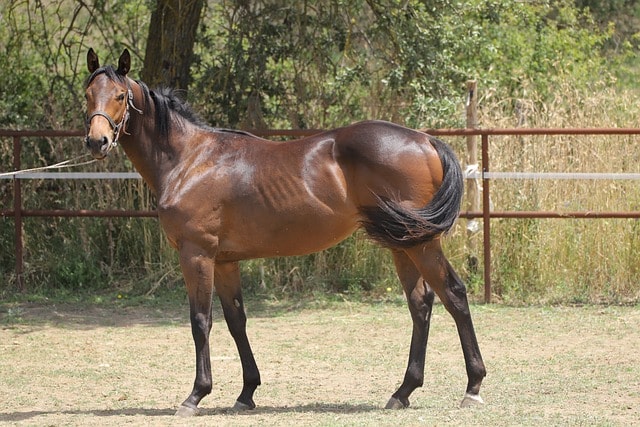
Though Quarter Horses and Thoroughbreds come from similar backgrounds, they were bred for different reasons.
Let’s examine the history behind each breed.
Quarter Horses
The Quarter Horse, also known as the American Quarter Horse, originated in colonial America in the 1600s when eastern seaboard horses were bred with English Thoroughbreds.
Recognized for their speed and agility, Quarter Horses became popular flat race contenders and were named after the quarter mile race, in which they excelled.
During the Westward expansion of the 19th century, these horses were crossed with other breeds and used in various areas. They gained popularity in ranches due to their innate ability to work well with cattle.
Officially, the first Quarter Horse races took place in 1947 in America after the American Quarter Horse Association was founded in 1940.
Today, they are bred as a distinct breed and are still widely used in Quarter Horse races and on cattle farms.
Thoroughbreds
Thoroughbreds are a horse breed specifically developed for horseracing by breeding English mares with one Turcoman and two Arabian stallions. The offspring of these breeds were made to compete in flat races, and the term “thro-bred” was first used to describe this breed in the 18th century.
The first organized flat racing event, where only Thoroughbreds were allowed to compete, took place in 1174 in the Smithfield Market in London.
Since then, these horses have spread around the world and are still used for flat racing and competing in many prevalent events from Europe to North America.
Size and Body Type
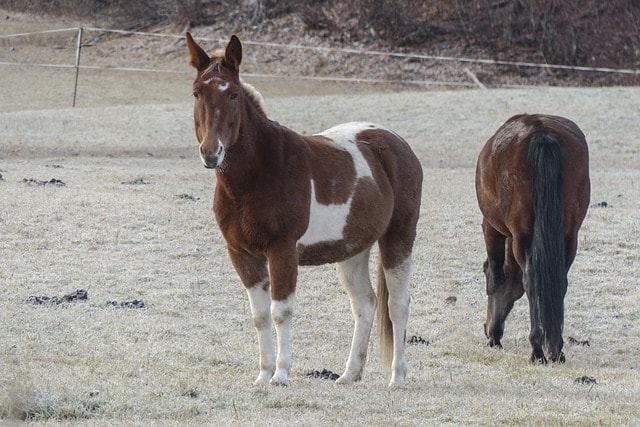
One of the easiest ways to tell Quarter Horses and Thoroughbreds apart is to look at their physical appearances.
Quarter Horses
Quarter Horses have muscular, compact frames that make them easy to tell apart from other horse breeds.
An adult Quarter Horse can weigh between 1,000 lbs and 1,200 lbs and grow up to be 14.3 to 16 hands. Their chests, forearms, and hindquarters are well-muscled, giving them the power to sprint short distances.
Thoroughbreds
Thoroughbreds can be recognized for their graceful physique, long limbs, and lean bodies. Their chests are deep, allowing for excellent lung capacity and endurance.
They are slimmer and often lighter than Quarter Horses, with an average weight ranging from 800 lbs to 1,000 lbs. They are also taller, with adult Thoroughbreds reaching a height of 15.2 to 17 hands.
Color and Appearance

Apart from the differences in size and body type, there are other differences that facilitate differentiating between the two horse breeds.
Quarter Horses
Due to their vast gene pools, Quarter Horses come in various coat colors; however, bay and sorrel are the most common. They have wide foreheads and small, pointy ears, giving them a softer facial structure than Thoroughbreds.
Their coats are often thick, glossy, and smooth and often change in quality according to the season.
Thoroughbreds
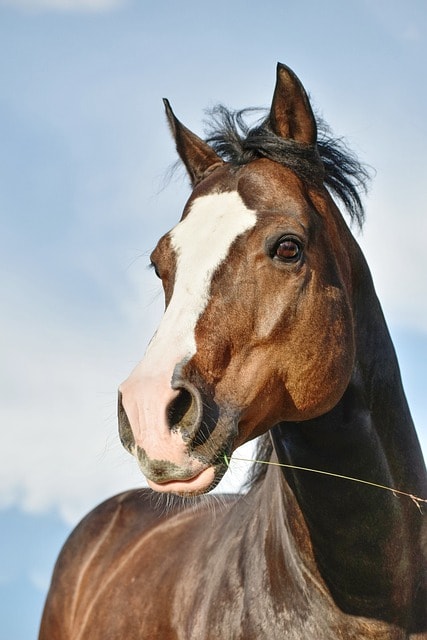
Thoroughbreds are tall, slim, and elegant. They have a refined and straight profile, with larger ears than Quarter Horses. They also come in a variety of coat colors, including chestnut, gray, and bay. Their fur is often fine, which makes them more vulnerable to extreme temperatures.
Temperament and Personality
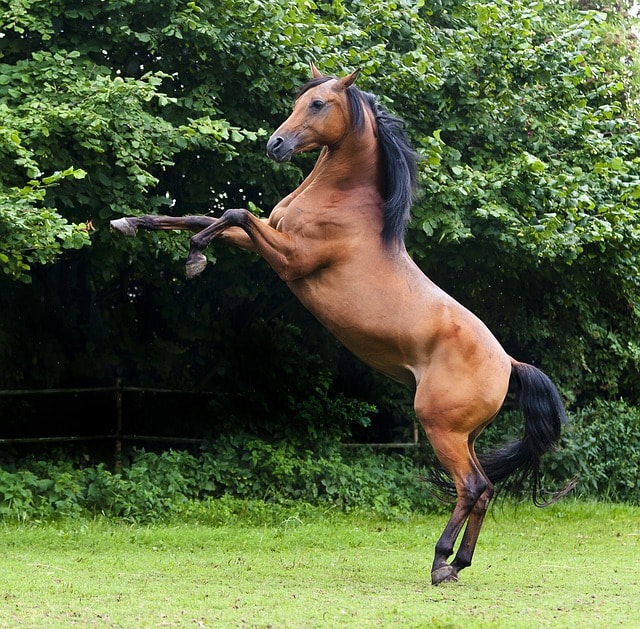
Due to training and generations of breeding, Quarter Horses and Thoroughbreds have developed different temperaments, which we’ll explore in detail now.
Quarter Horses
Quarter Horses are calm and balanced, making them extremely reliable working animals. Their intelligence and responsiveness make them easy to cooperate with, and they respond fairly well to their handlers.
Thoroughbreds
Due to their breeding and training, Thoroughbreds often have a more independent and reactive personality type than Quarter Horses. They carry a somewhat diva-like quality among horse breeds, making them a bit harder to work with than others.
However, they are extremely witty and quick to learn. So, with the right training, they can become highly responsive and great companions.
Training
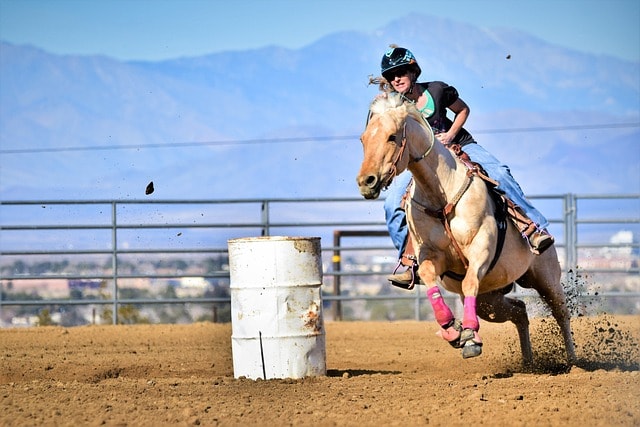
The temperament and openness to training of these horse breeds go hand in hand. Here is some information on the training capacity of Quarter Horses and Thoroughbreds.
Quarter Horses
Quarter Horses are much easier to train than Thoroughbreds. Their calm temperament and strong work ethic make them great for various tasks such as cattle farm work, racing, and riding.
They bond easily with their handlers and are eager to please and calm, even in the most challenging situations. Due to their high intelligence, they can also understand instructions easily.
Thoroughbreds
Due to their independent spirit, Thoroughbreds are a bit harder to train than Quarter Horses. They need to bond with their handlers, which can sometimes be challenging. However, once they bond, their intelligence and learning capabilities shine through. Competitive by nature, they strive to outperform with each task.
Training Thoroughbreds requires patience and discipline. Unless you are able to demonstrate dominance, their free spirits will prevent them from obeying fully.
Riding
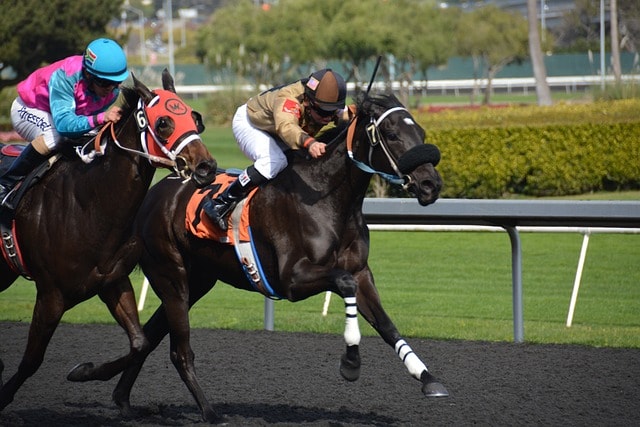
Both breeds are great racehorses. Here’s how they differ.
Quarter Horses
Quarter Horses are excellent for riding. They can be trained for professional races or recreational riding. On slow walks, they have a steady gait that is comfortable for most riders. They are also not reactive, so riding them is relatively safe for both beginners and advanced riders.
Thoroughbreds
Thoroughbreds are specifically trained for horseracing; however, riding them is not as easy as one may think. They have a reactive and high-strung nature, making them more suitable for riders with experience.
While Quarter Horses are great to ride at any speed, Thoroughbreds are better for individuals who enjoy more fast-paced and athletic activities.
Disciplines and Skills
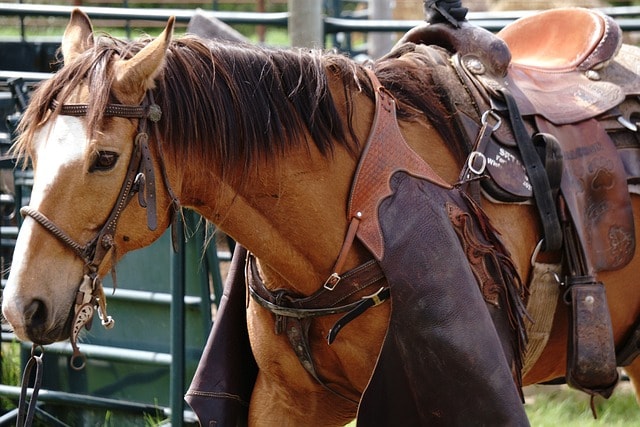
Due to the differences in training and temperament, these horses excel in different fields.
Quarter Horses
Quarter Horses are great as farm work animals, as they can carry heavy loads and get along with other animals. They’re the go-to breed for many individuals learning how to ride horses.
When it comes to races, they perform exceptionally when sprinting short distances due to their muscular build. As such, Quarter Horse races are a quarter of a mile in length. They also perform well in Western riding disciplines and are one of the best horses for barrel racing and recreational riding.
However, they may not perform well in longer races that demand endurance.
Thoroughbreds
Thoroughbreds excel in longer races that require high levels of endurance. We could compare them to human marathon runners, as they are talented long-distance runners, and their whole training is focused on this performance. They are rarely trained for any skill other than this.
Maintenance
As mentioned, Quarter Horses and Thoroughbreds are bred for different reasons. In order to excel in their prospective areas, they are cared for differently.
Quarter Horses
Apart from needing regular exercise and a diet consisting of high-quality grains and hay, Quarter Horses are quite low maintenance. They can thrive in various conditions and are generally sturdy animals.
However, they still require periodic visits to the vet.
Thoroughbreds
Thoroughbreds are considerably high maintenance. Their energetic nature and fragile physique make them more susceptible to injuries.
Since they have higher energy needs, they need a diet consisting of high-quality grains, hay, and additional supplements. They are also more sensitive to cold weather and may need blankets/rugs or a stable with a heating system during the winter.
FAQs
Can a Quarter Horse beat a Thoroughbred?
Yes, they can. A 2006 study measuring the average speeds of Quarter Horses, Thoroughbreds, and Arabians revealed that Quarter Horses were the fastest out of the three. In fact, Quarter Horses are recognized as the fastest breed of horse in the world.
Can a Quarter Horse run in the Kentucky Derby?
Quarter Horses cannot run in the Kentucky Derby. As with each race, eligibility standards also apply to the Kentucky Derby. Only three-year-old Thoroughbreds can run in the Kentucky Derby.
What horse is faster than a Thoroughbred?
On average, Quarter Horses are faster than Thoroughbreds. However, this doesn’t apply to all. Thoroughbreds can perform better in races depending on training and individual strength.
Final Thoughts
While both Quarter Horses and Thoroughbreds have excellent speed and agility, they bring completely different strengths to the table.
Due to differences in physique, training requirements, temperament, and maintenance, they are better suited for distinct activities.


